Agent-Maintained Tech Docs. Zero Drift.
Etchblok builds a deterministic map of your codebase so our agents generate and update tech docs grounded in system truth.
60-second setup. Generation in minutes.
Etchblok handled flyte-sdk, our complex open source SDK, remarkably well. It produced accurate documentation with meaningful usage examples, despite the depth and complexity of our codebase. This is the kind of documentation experience fast-moving engineering teams need.

How Etchblok works
Supports Python. JavaScript and TypeScript next.
Creates deterministic map of codebase
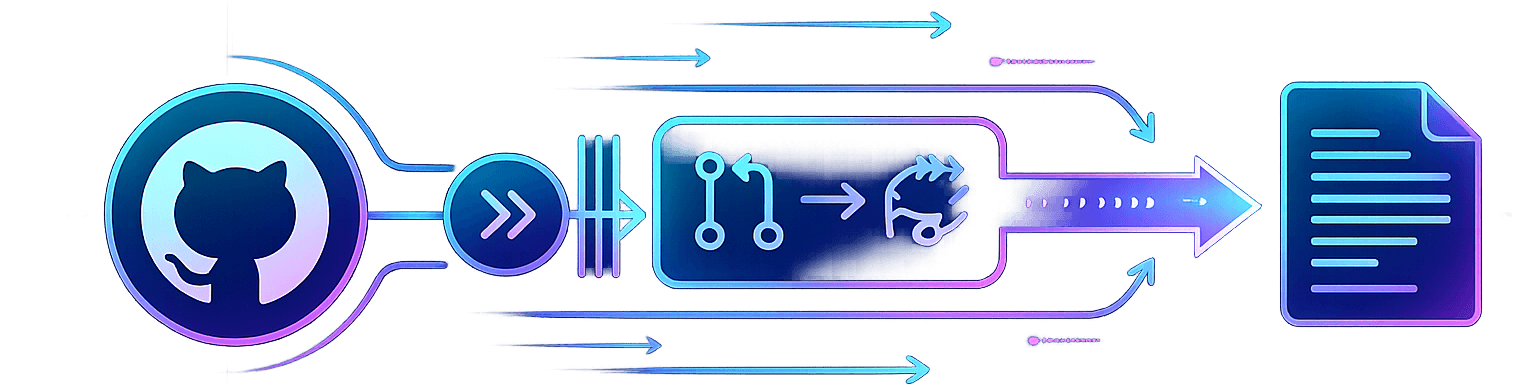
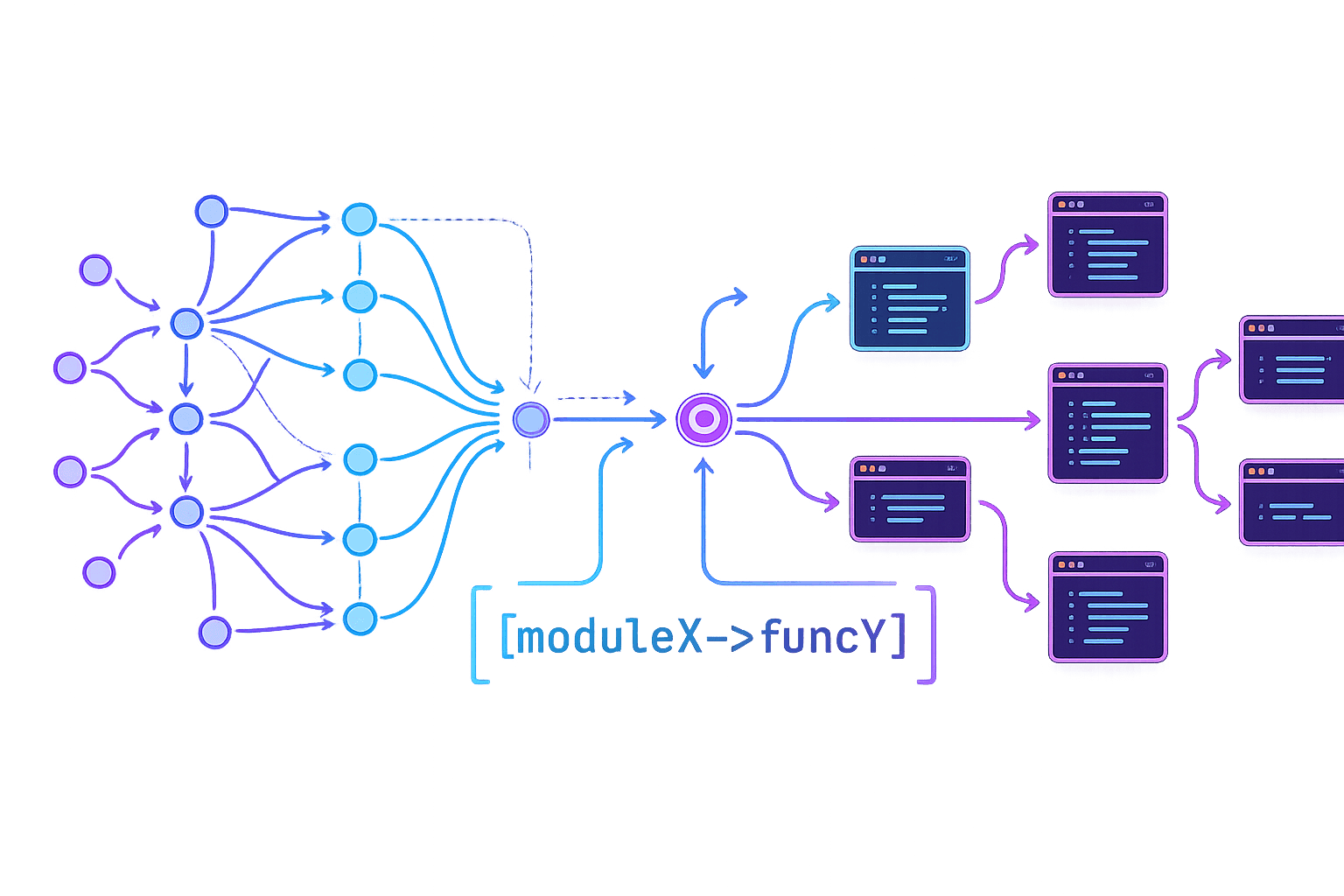
Etchblok parses your code into an AST, resolves cross-file imports, and constructs your actual call graph.
Read why we chose structural reasoning over generative inference →Agents write the tech docs
Agents write the docs against the deterministic map — every explanation grounded in the actual code structure, not pattern-matched from training data.
Etchblok’s agents monitor codebase for updates
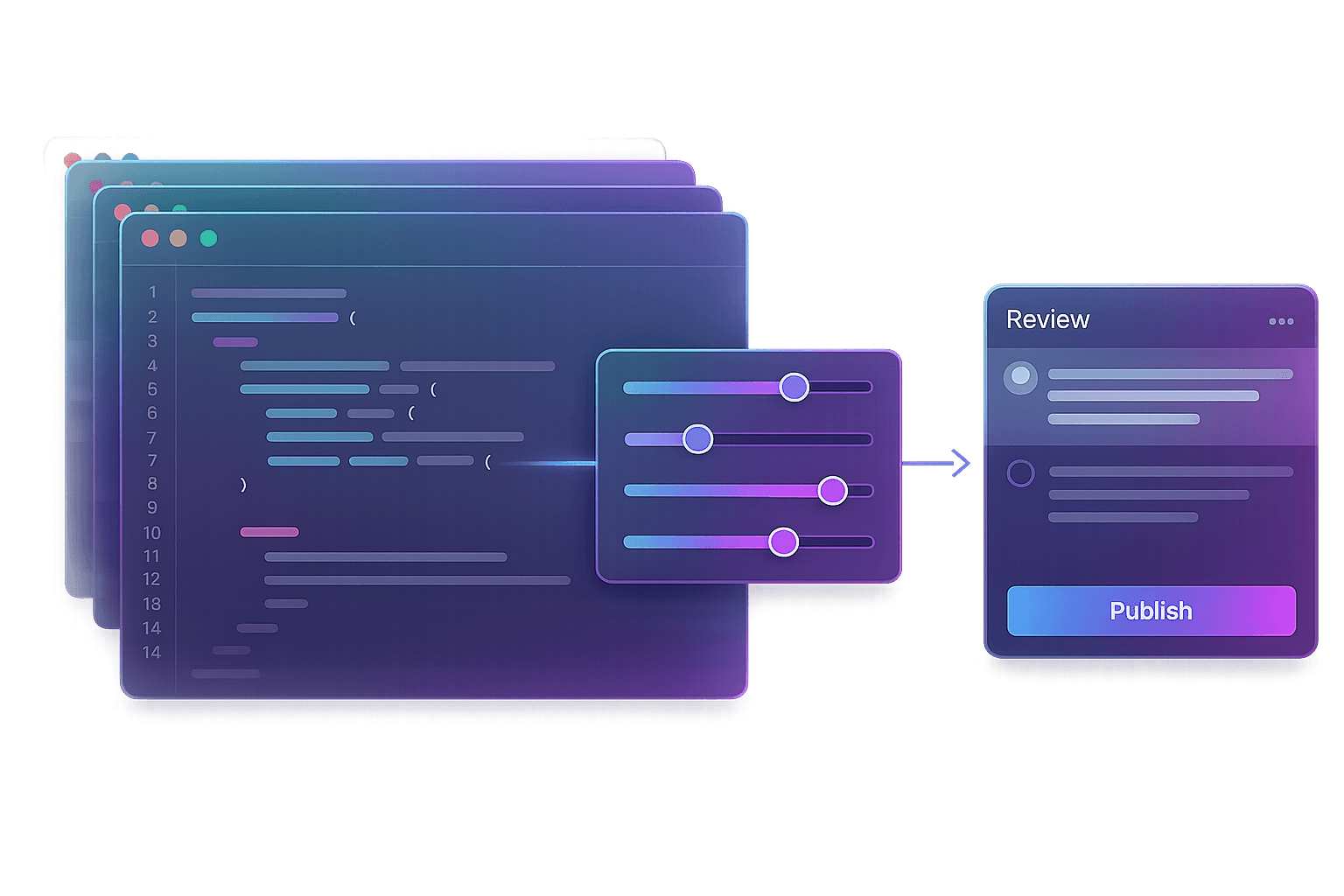
When a code change is merged, Etchblok’s agents open a PR with the doc updates. Your team reviews and merges — or you can enable auto-merge to skip the review.
Etchblok’s agents reason over your codebase to decide which guides your users need. Then they write them.
Overviews, getting started docs, tutorials, how-to guides, architecture explanations, and key concept breakdowns — all generated by our agents.
See a getting started guide for Flask generated by Etchblok →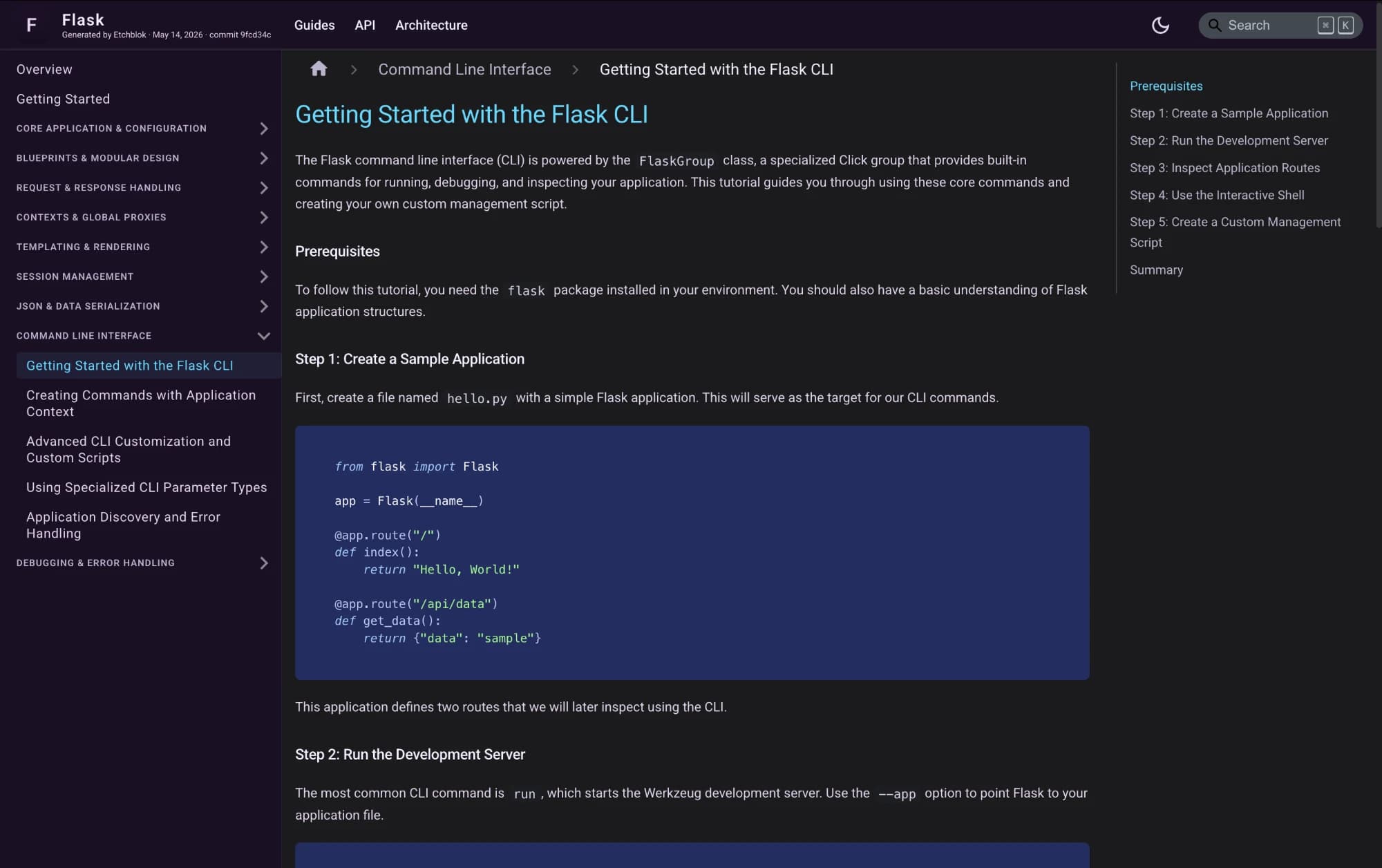
Architecture docs built from your actual dependency graph.
We build a deterministic map of your system first, then our agents generate the architecture docs. Etchblok’s agents produce living Mermaid diagrams and narrative guides that track actual system behavior as the system evolves. No tracing call hierarchies manually. No hand-drawn diagrams. No writing syntax in markdown files.
See an architecture overview for Flyte SDK generated by Etchblok →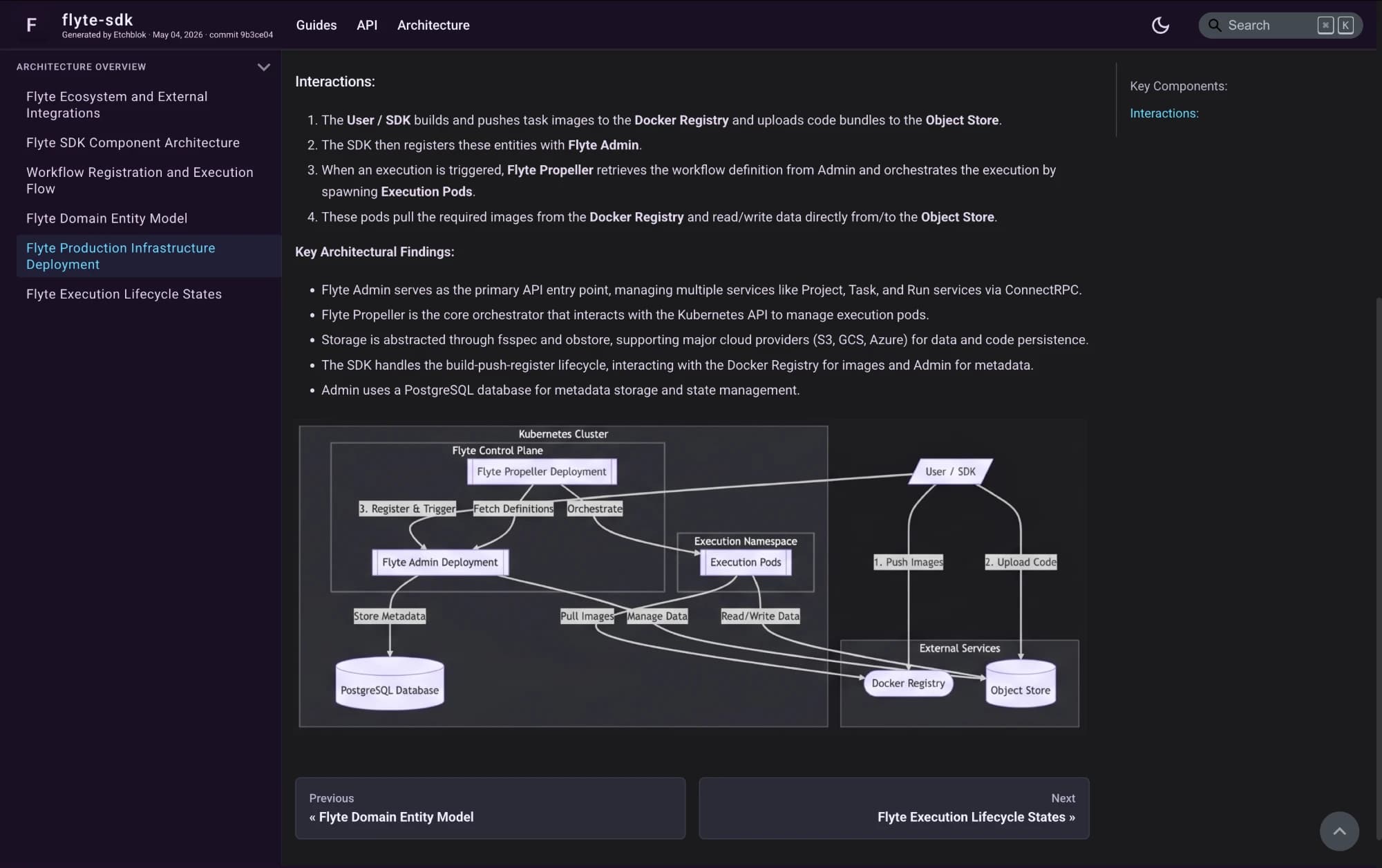
API references that know what’s actually public.
Most tools document everything they find, including internal methods, private helpers, and deprecated endpoints that were never meant to be public. Etchblok’s agents resolve your call graph to determine what’s truly public, trace cross-file inheritance, and generate references that reflect your actual API surface.
See API references for Flyte SDK generated by Etchblok →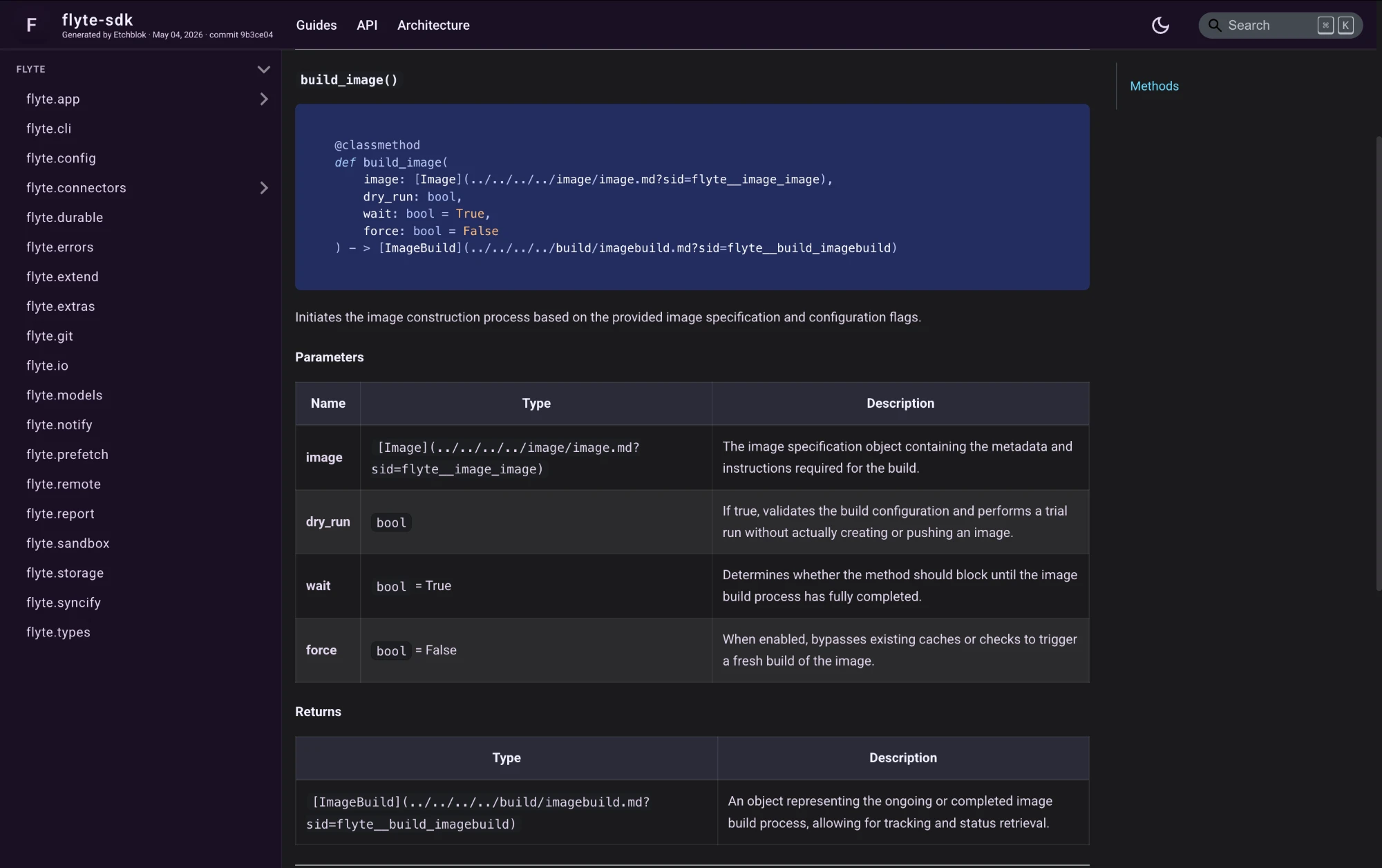
Other AI tools document your syntax. Etchblok documents your architecture.
What Etchblok delivers
Supports Python. JavaScript and TypeScript next.
Why Continuous Documentation?
Across every team shipping with AI assistance, one quiet shift has reshaped engineering: the comprehension layer has fallen behind the generation layer.
Code now moves at machine speed. Documentation produced by hand can’t keep up. The gap shows up on the P&L — in lost prospects at the evaluation stage, in support tickets that route to engineering, in silent churn.
And it’s about to get worse. AI agents have begun consuming tech docs as infrastructure, treating it as ground truth they act on. Accuracy is no longer a courtesy to human readers — it’s a prerequisite for machines.
Just like we moved from manual testing to CI/CD, we’re moving from manual documentation to Continuous Documentation.
Founding Partners Program
We’re being deliberate about who we work with this early. We’re working with a small group of Series A–C companies whose operations depend on highly accurate documentation and who want to eliminate doc drift. Founding Partners aren’t beta testers — they’re the engineering teams working directly with us to shape what Etchblok becomes.
The program is paid. We think that’s important: it means we’re accountable to you as customers, not just early users, and you’re committed enough to give us the kind of feedback that actually moves the product forward. Founding Partners pay a founding rate to join, locked in even after GA.
We are accepting applications from teams with Python codebases and will limit selection to 10 teams so we can engage deeply. To ensure we are architecting the product to solve the highest-leverage documentation challenges, we will prioritize teams who maintain complex, rapidly evolving software architectures and tech docs where accuracy is non-negotiable.